


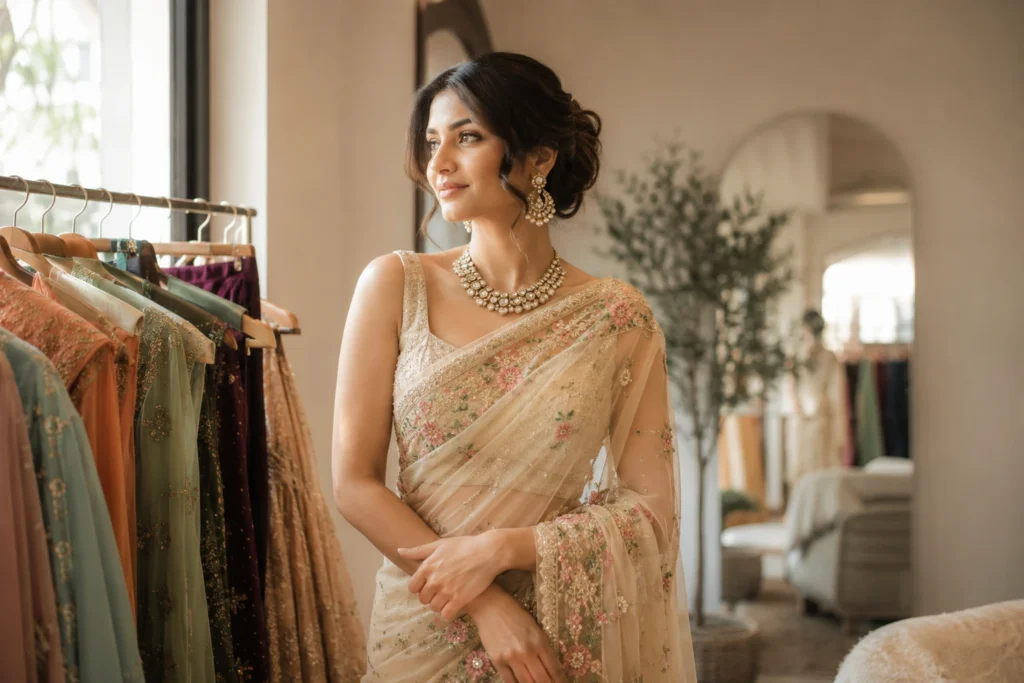
There’s a reason women’s ethnic wear never really leaves the conversation, no matter how many fast-fashion trends cycle through each season. It carries something a trendy top or a pair of jeans simply can’t — a sense of occasion, of heritage, of dressing up on purpose. Whether it’s a Sunday brunch, a festival at home, or a full wedding season ahead, reaching for ethnic wear for women still feels like the outfit decision that solves the most problems at once.
What’s changed is how women shop for it. Instead of running between five boutiques hoping something fits the vision in your head, more shoppers are now browsing a curated designer ethnic wear online collection from the comfort of home, comparing fabrics, silhouettes, and price points before ever stepping into a fitting room. That shift hasn’t made the shopping easier by accident — it’s made it easier because the choices got better, and knowing what to look for makes all the difference.
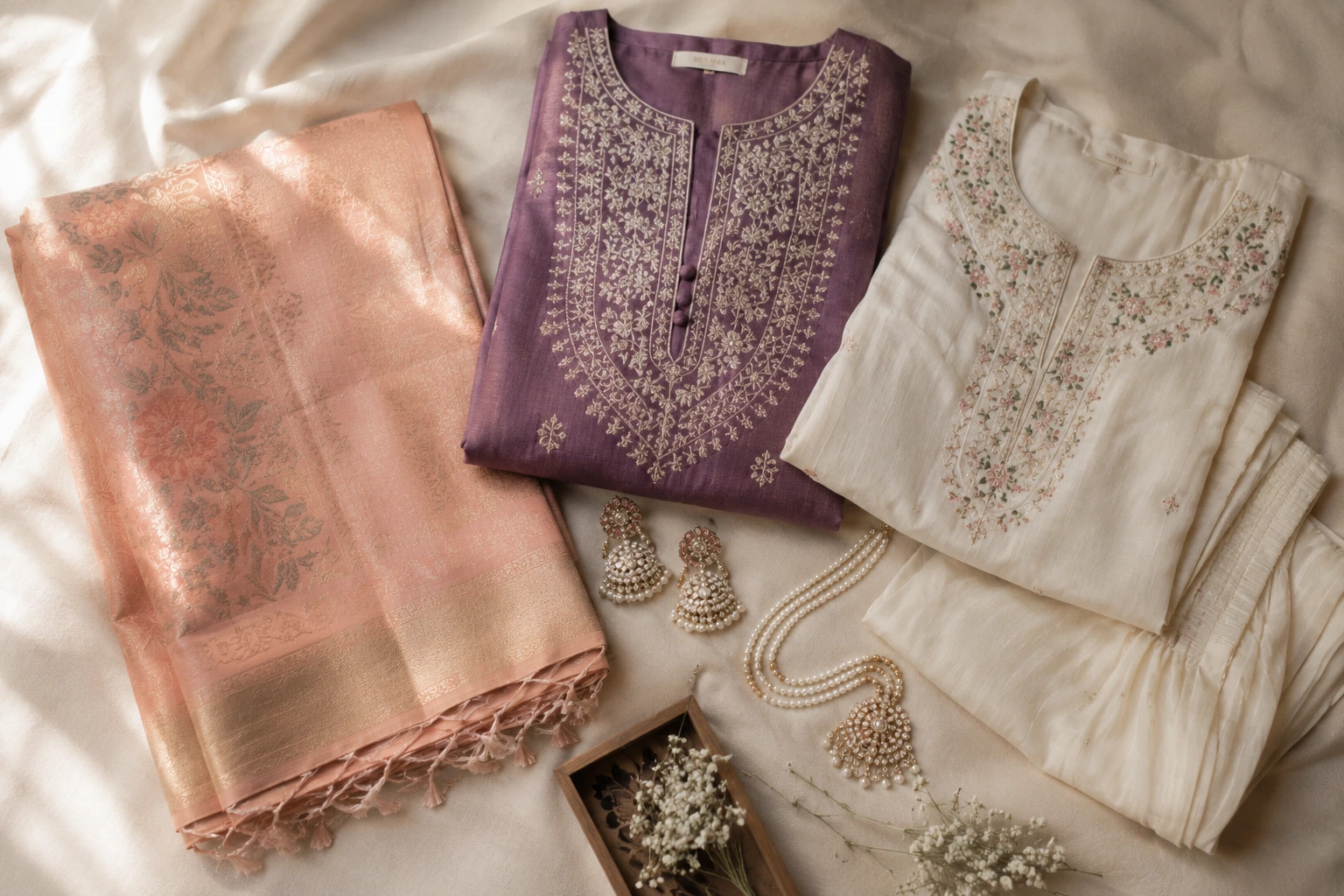
What Makes Women’s Ethnic Wear a Wardrobe Staple
Ask ten women why they keep coming back to women’s ethnic wear and you’ll get ten different answers — but they usually circle the same idea: nothing else does quite as much work for as little effort. A well-chosen ethnic outfit doesn’t need to be paired, restyled, or second-guessed the way separates often do. It arrives complete.
That’s part of why traditional ethnic wear has held its ground even as everyday fashion leans casual. A saree or a kurta set carries built-in formality without needing a blazer or heels to “elevate” it — the outfit already understands the assignment. And because most Indian ethnic wear collection pieces are designed around timeless silhouettes rather than seasonal trends, they don’t go stale in the back of a closet after one wear.
The other piece is versatility. A single piece of ethnic wear can move from a daytime family function to an evening celebration with nothing more than a change of jewelry or footwear — which is more than most Western wear can promise.
Types of Women’s Ethnic Wear
Not all women’s ethnic wear is built for the same moment, and understanding the differences between styles makes shopping — and styling — far less overwhelming.
Sarees: The Timeless Choice
The saree remains the most recognizable form of traditional ethnic wear, and for good reason. Whether it’s a lightweight cotton weave for daytime functions or a heavily embellished silk for a wedding, the drape itself does most of the styling work. It’s an outfit that adapts to the fabric more than the fabric adapts to it.
Kurta Sets: Everyday Elegance
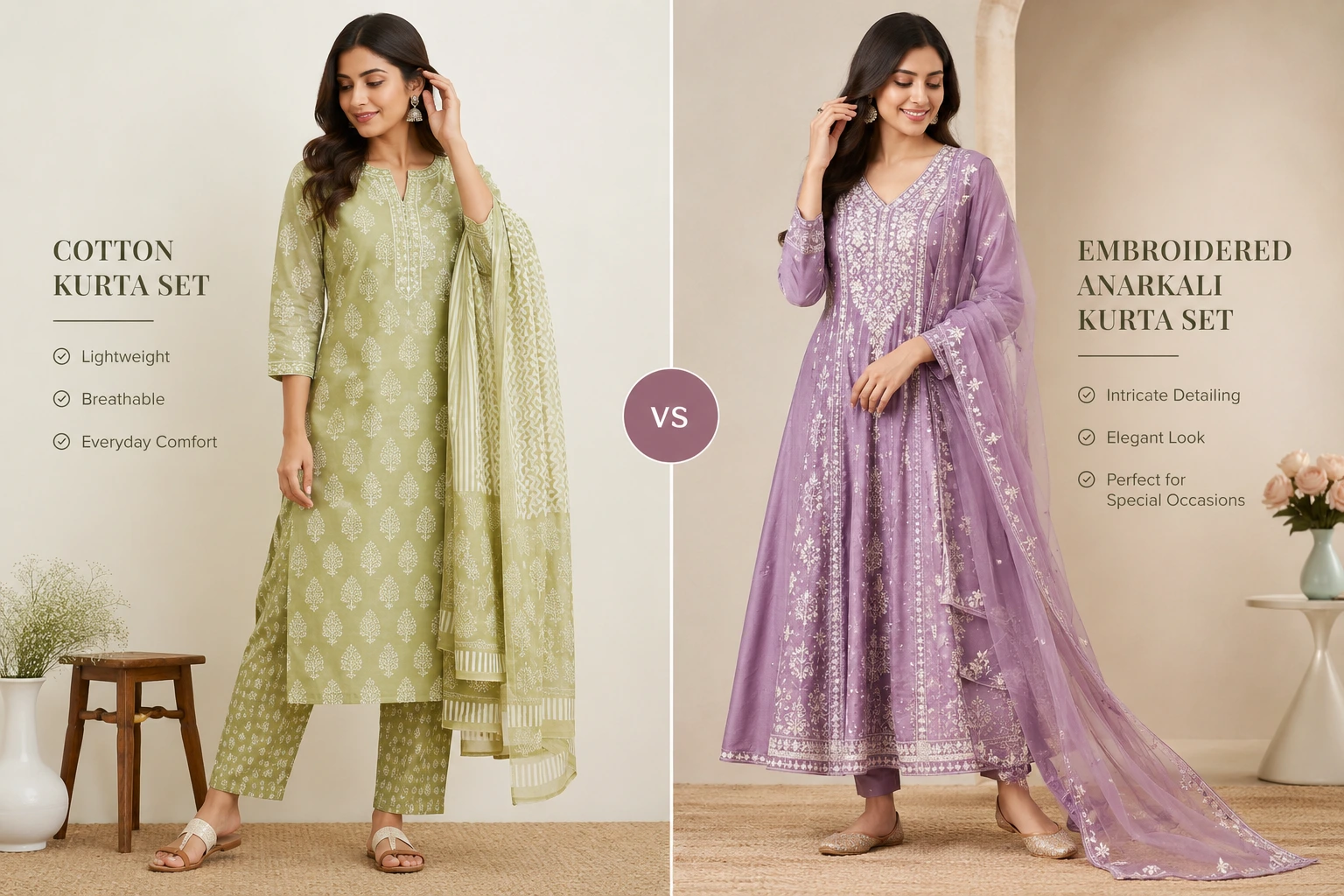
For women who want ethnic dressing without the formality of a saree, women’s kurta sets online collections have become the go-to. Breathable cotton options work well for office days and casual outings, while embroidered or Anarkali-style sets step comfortably into festive territory.
Lehengas: Festive and Bridal Statement Pieces
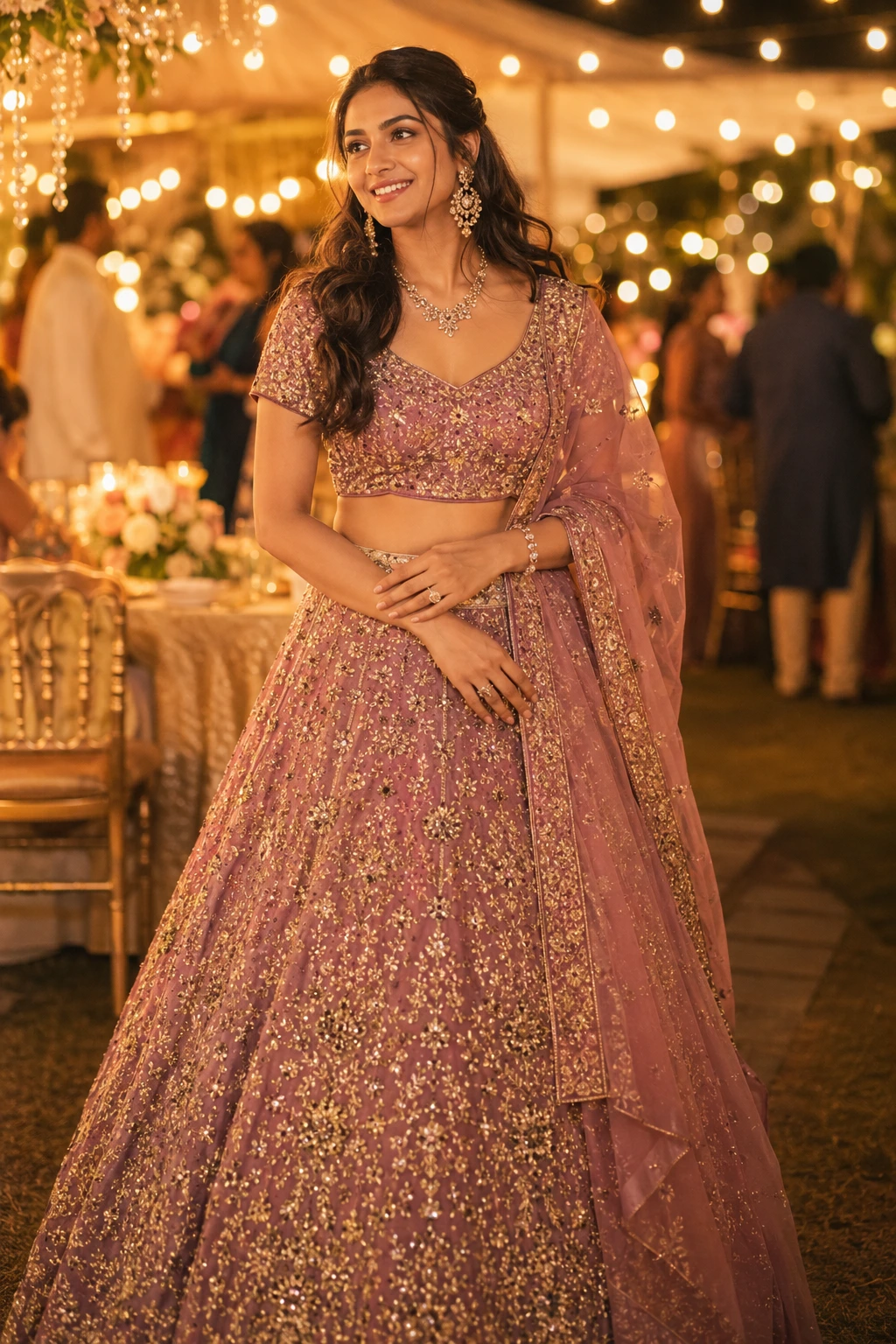
When the occasion calls for more drama — a sangeet, a reception, a big family wedding — a lehenga is usually the answer. Rich fabrics, intricate embroidery, and a flowing silhouette make it the most photographed piece in any designer ethnic wear online wardrobe.
Fusion and Anarkali Styles: A Modern Middle Ground
For shoppers who want something that bridges tradition and contemporary fashion, fusion pieces and Anarkali silhouettes offer that balance. They keep the spirit of ethnic wear for women intact while borrowing cuts and detailing that feel current rather than costume-like.
How to Style Women’s Ethnic Wear for Different Occasions
Once you’ve built a small collection of women’s ethnic wear, styling it well is mostly about matching the outfit’s formality to the moment.
- Casual outings: A simple cotton kurta set with flats and minimal jewelry keeps things relaxed without looking underdressed.
- Office or work events: Neutral-toned pieces from a women’s kurta sets online collection, paired with structured accessories, strike the right professional note.
- Festive celebrations: This is where embroidery, richer colors, and statement jewelry earn their place — think Indian ethnic wear collection pieces with a little more shine.
- Wedding functions: Lehengas or heavily worked sarees, paired with layered jewelry and embellished footwear, complete the look.
- Family gatherings: A contrasting dupatta and comfortable footwear keep the outfit practical while still feeling put-together.
- Weekend brunches: Pastel-toned ethnic wear for women with soft makeup and light accessories keeps the whole look easygoing.
The same base wardrobe, styled differently, can cover nearly every occasion on the calendar without needing constant new purchases.
Fabric vs Fit — What to Prioritize When Choosing Ethnic Wear
Shoppers browsing women’s ethnic wear often get stuck choosing between fabric quality and fit — and honestly, both matter, but for different reasons.
Fabric decides how the outfit performs. A breathable cotton or linen piece of traditional ethnic wear will feel comfortable through a long function, while heavier silks and velvets are better suited to shorter, more formal events where comfort takes a back seat to impact.
Fit, on the other hand, decides how the outfit looks in photos and in person. Even the most beautifully embroidered designer ethnic wear online piece falls flat if the blouse, waistline, or drape isn’t tailored correctly. If you’re choosing between the two while working within a budget, prioritize fit first — a well-fitted outfit in a simpler fabric will almost always outshine an expensive one that doesn’t sit right.
Buying Guide — What to Check Before You Shop
A little preparation goes a long way when shopping for women’s ethnic wear, whether you’re buying online or in-store.
- Check the fabric composition so you know how the outfit will feel through a full day or event.
- Review the size chart carefully rather than relying on your usual ready-to-wear size.
- Look for clear, well-lit product photos showing the front, back, and close-up fabric detail.
- Confirm blouse-stitching and alteration options if you’re buying a saree or lehenga.
- Read care instructions before purchasing, especially for embroidered or embellished pieces.
- Consider how easily the piece pairs with jewelry and footwear you already own.
- If shopping locally, look for a store offering ethnic wear Hyderabad shoppers already trust for tailoring and finish quality.
- Prioritize stitching, lining, and finishing details over surface embellishment alone.
Shopping this way turns what can feel like a stressful decision into a fairly quick, confident one.
Conclusion
At the end of the day, women’s ethnic wear isn’t just about following a dress code for an occasion — it’s about having pieces in your wardrobe that make getting dressed feel easy, not stressful. Whether your taste leans toward a classic saree, a comfortable kurta set, or a fully embellished lehenga, building a thoughtful collection of ethnic wear for women means you’re rarely caught without the right outfit. Start with versatile basics, invest a little more in occasions that matter, and let the rest of your wardrobe fill in around it.